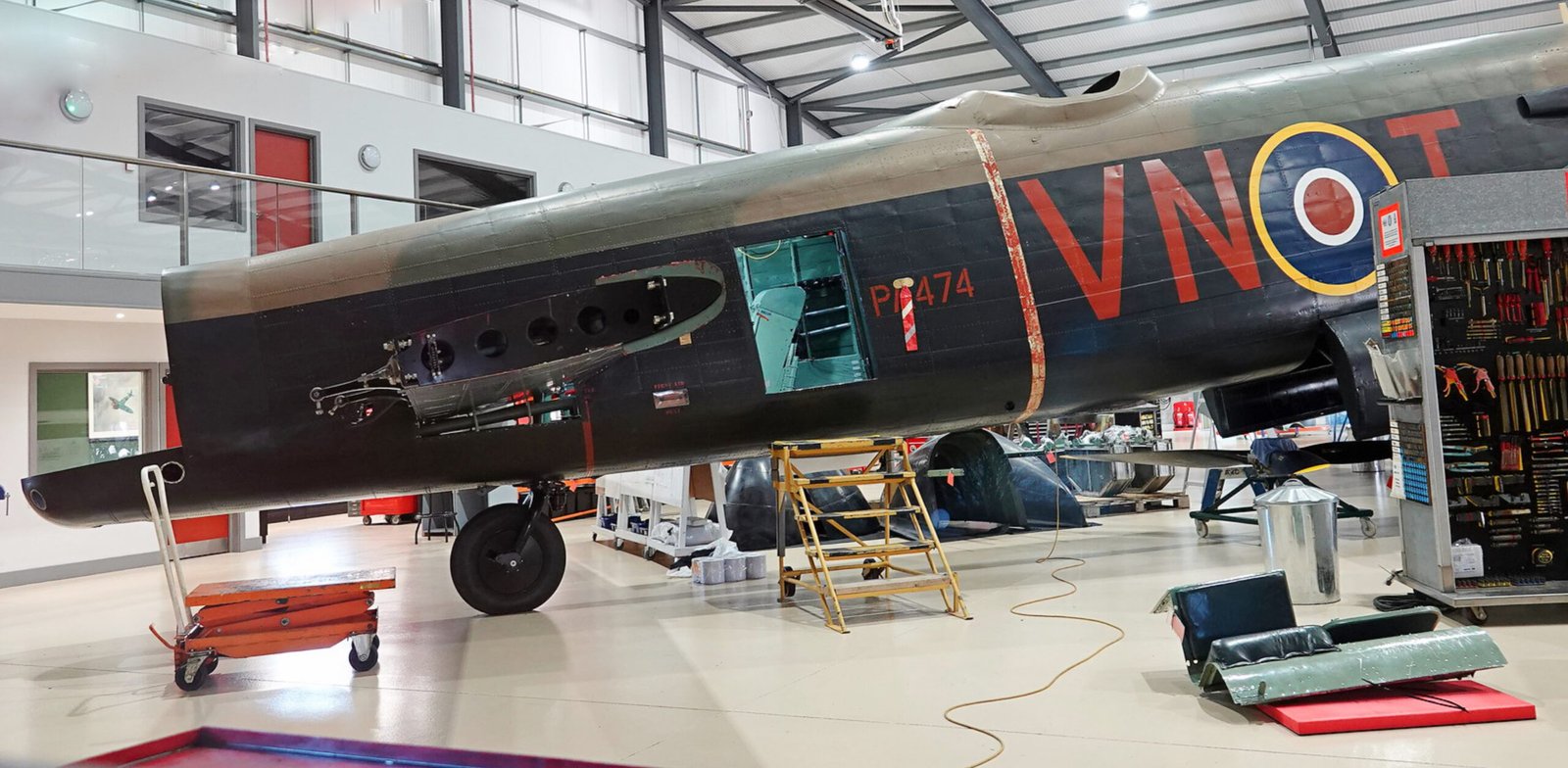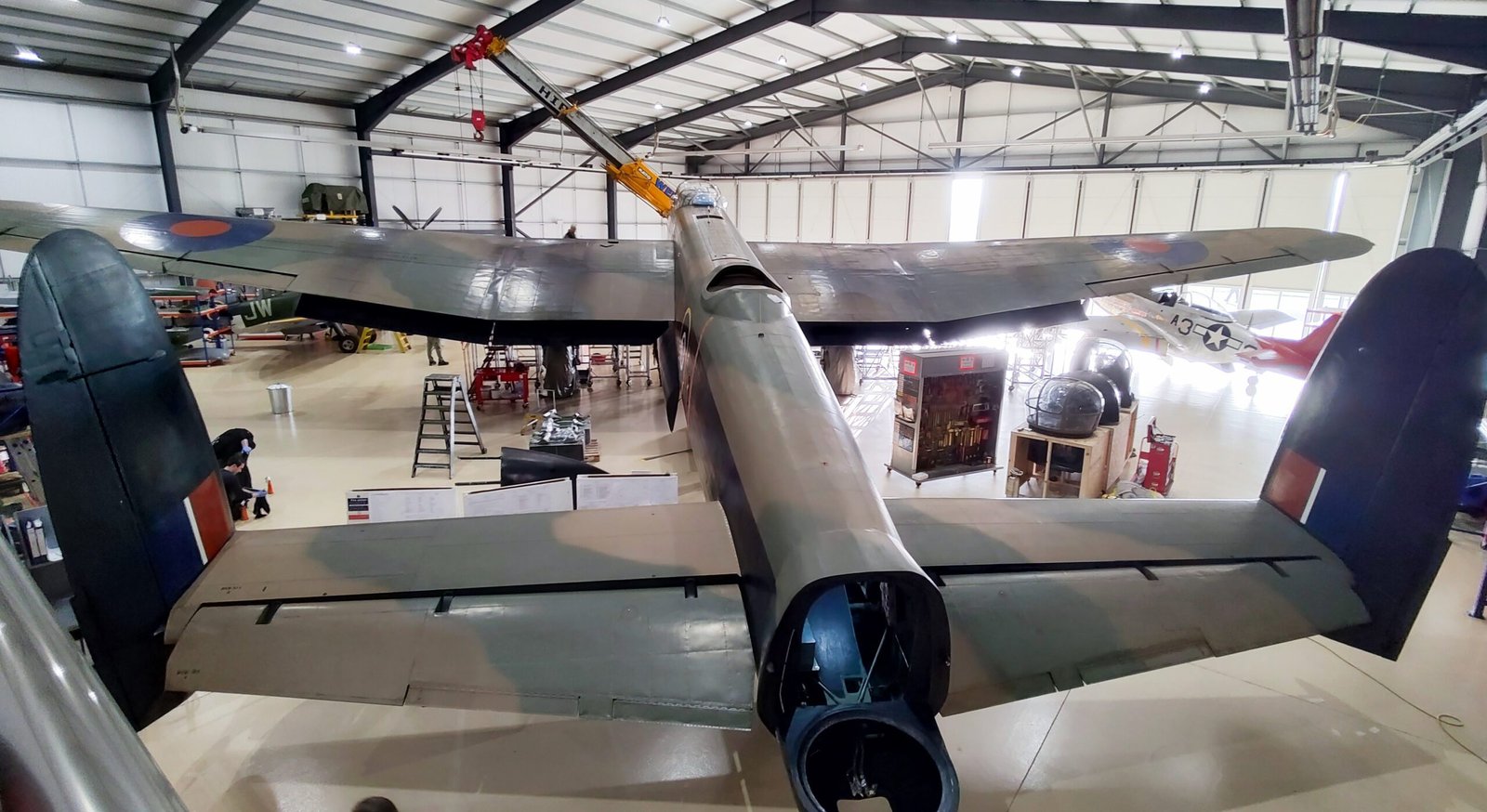
Avro Lancaster PA474, one of the most iconic aircraft in British aviation history, has begun a major maintenance programme at the Aircraft Restoration Company (ARCo) in Duxford.
The aircraft arrived at the site on 31st October, where technicians from the Battle of Britain Memorial Flight (BBMF) first carried out engine ground runs before inhibiting the engines. The Lancaster was then defuelled, with oil and coolant tanks and radiators drained, before being weighed ahead of the extensive maintenance work now underway.
One of the first major tasks was the removal of all three gun turrets to allow engineers to inspect the turret rings and other hidden areas for any signs of corrosion. Encouragingly, no issues were found during these initial checks.
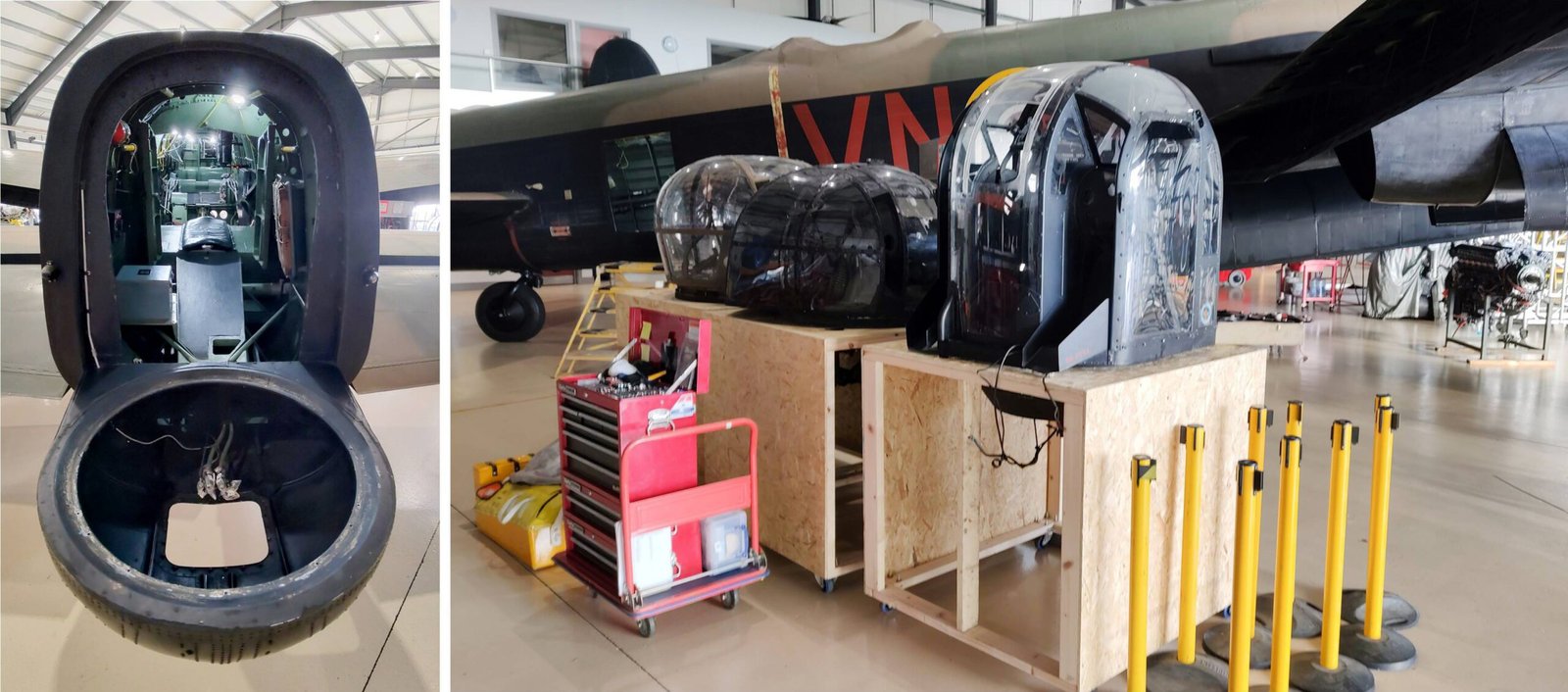
Left: Lancaster PA474’s rear turret has been removed for the first time in many years.
Right: All three of the gun turrets are now out of the aircraft
(Photos: BBMF)
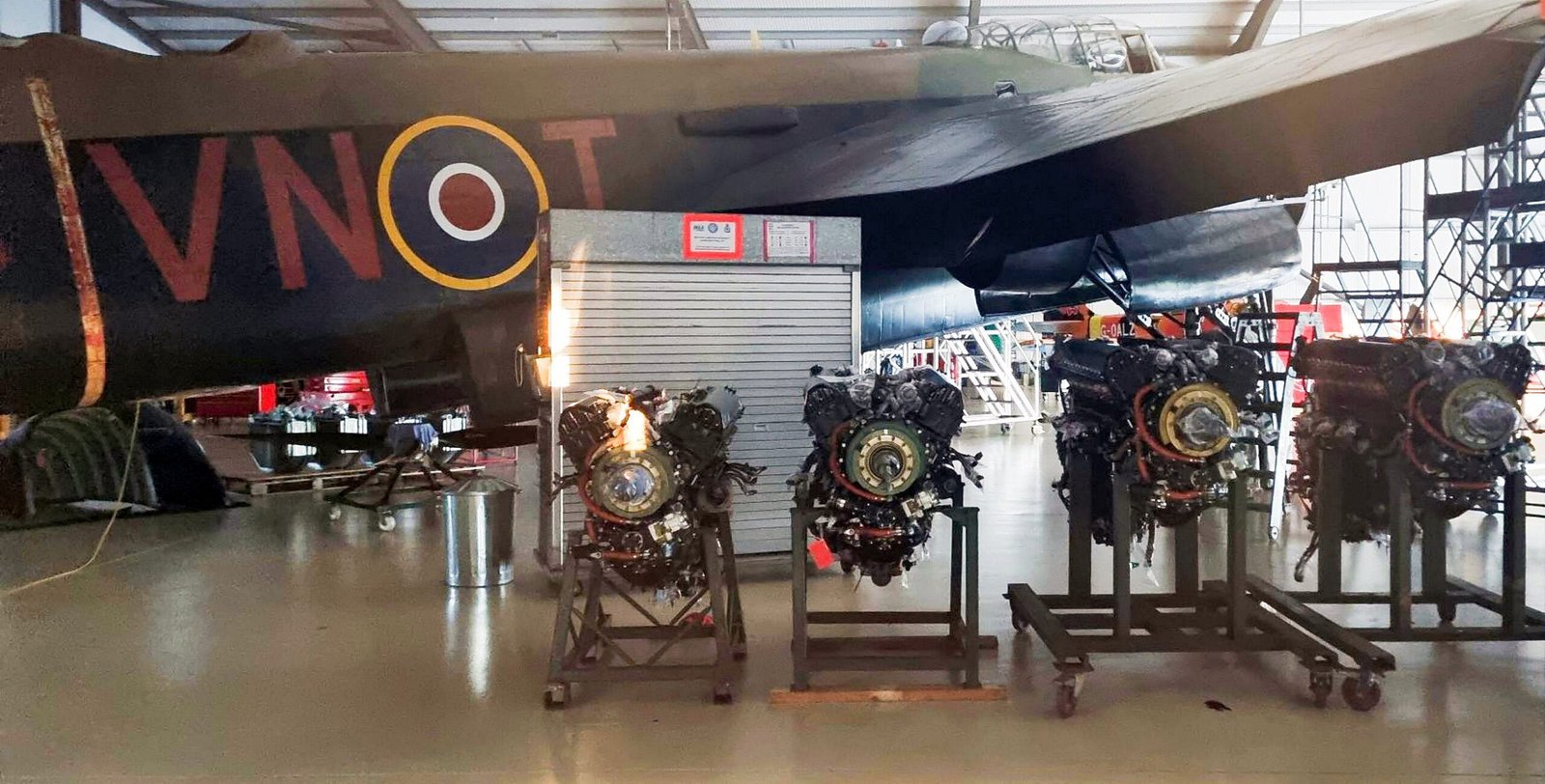
All four Merlin engines, along with their associated radiators and oil coolers, have now been removed. One of these engines will be fitted to BBMF’s Hurricane PZ865, which requires an engine change, while a recently overhauled engine will be supplied for the Lancaster by Retro Track and Air.
 To allow the engines to be safely removed, the aircraft was initially positioned in the ARCo hangar with its tail facing the rear of the building, enabling crane access at the front. With the engines now out, the Lancaster will be repositioned nose-first into the hangar, where it is expected to remain for the next 12 months or so.
Further major work is planned, including the removal of the rudders, fins and tail planes, along with the tail wheel leg. The fuselage will then be jacked in preparation for splitting it at the transport joint behind the mid-upper turret.
 This step is necessary to allow engineers to replace the elevator and rudder control tubes. In preparation, rear fuselage wiring and piping has already been disconnected, and the rear floor removed. Trestles and support frames for the removed rear fuselage are being borrowed from the Lincolnshire Aviation Heritage Centre at East Kirkby, while the replacement control tubes have now returned from anodising and are ready to be fitted.
Elsewhere on the aircraft, many of the Lancaster’s access panels have been removed, cleaned and inspected to assess whether any repairs will be required as the programme progresses.
The work marks another significant chapter in the ongoing care of PA474, ensuring the legendary bomber can continue to be preserved for future generations.