Tens of thousands of homes and businesses across England will be better protected from the devastating impact of flooding with investment to construct new flood schemes and upgrade existing flood defences, the Environment Agency announced today (Tuesday 17 March).
More than 600 projects will be funded to help better protect tens of thousands of homes and businesses this year – from improved flood barriers and embankments to natural flood management schemes that slow the flow of water before it reaches communities and coastal flood defence projects that reduce the risk of flooding
Together they form part of the largest flood defence programme in English history with at least £10.5 billion invested between 2024 and 2036 to protect homes, businesses, and critical infrastructure from the growing threat of flooding This is part of a £1.4 billion investment in flood defences in 2026/27.
Across the country, major schemes already underway are helping protect communities from flooding and coastal erosion.
The Lower Witham Flood Resilience Project aims to increase flood resilience in the Lower River Witham Fens from Lincoln to Boston.
The area is largely low-lying land which has been drained and protected by embankments and flood defences, many of which are over 200 years old. These aging flood defences are increasingly under pressure from repeated flooding and climate change.
The project therefore focuses on repairing and upgrading existing flood defences while also planning a longer-term strategy for managing flood risk.
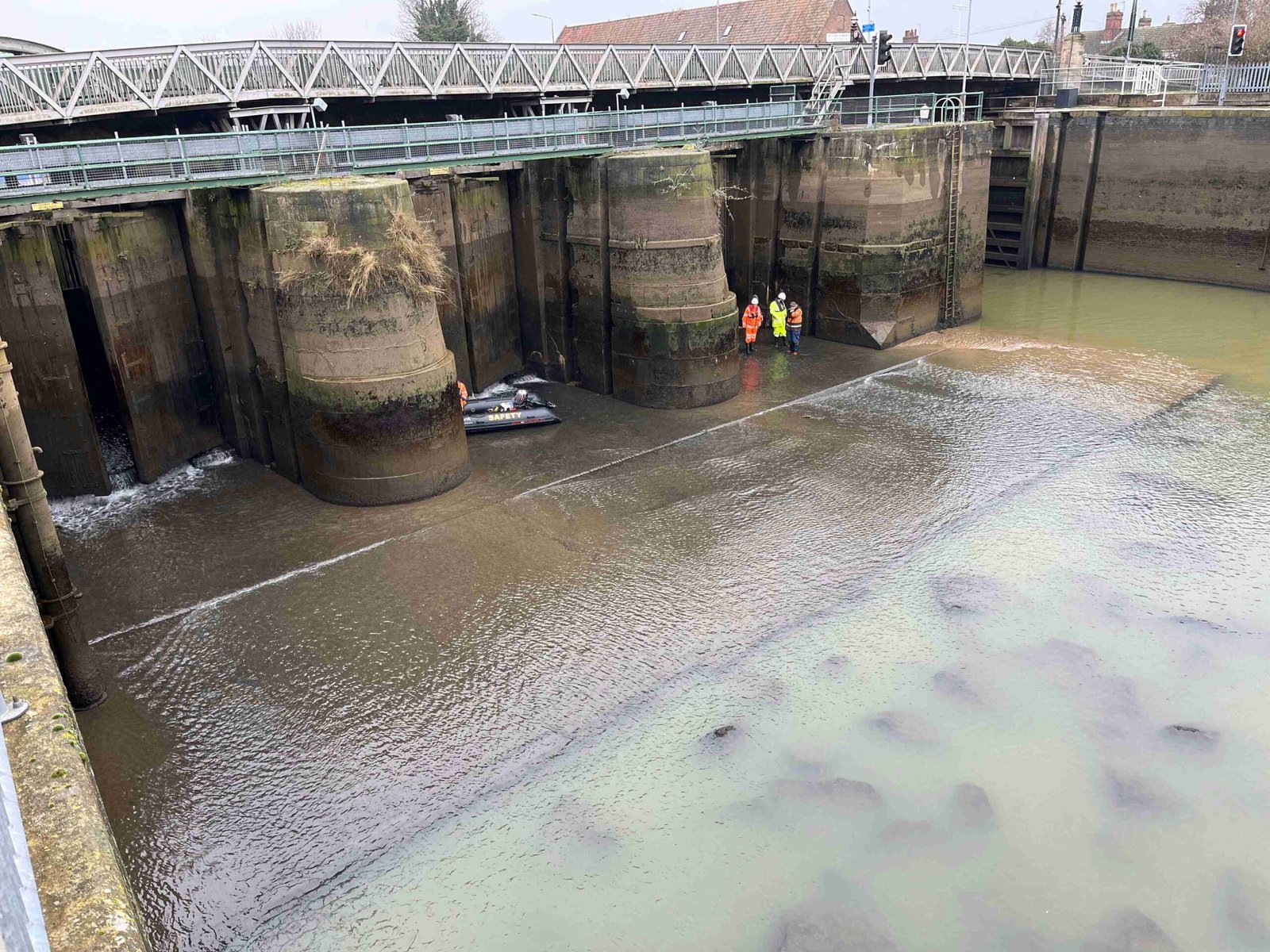
A significant part of this project is the Grand Sluice refurbishment in Boston, where the Environment Agency is replacing the main gates, making structural repairs and improvements. For 250 years the Grand Sluice has kept the tide out of the River Witham Fens and managed water levels in the river from Boston to Bardney. To ensure the sluice can continue this vital job the Environment Agency is undertaking a refurbishment over a number of years.
Elsewhere in Lincolnshire, the Saltfleet to Gibraltar beach renourishment scheme continues to reduce risk of flooding for Lincolnshire’s coastal communities.
In May around 200,000 to 500,000 cubic metres of sand will be topped up on beaches between Saltfleet and Gibraltar Point. The annual beach management involves dredging sand from licensed seabed areas and pumping it onto beaches, replacing the sand naturally lost to the sea throughout the year.
This reduces the risk of flooding for 20,000 homes and businesses, 24,500 static caravans and 35,000 hectares of land. Replenishing the sand means that the beaches, instead of hard defences like sea walls, take the brunt of the waves’ force and energy. This reduces the amount of damage and erosion to those hard defences and lessens the risk of water overtopping them.
£260 million will be also allocated to repairing and maintaining Environment Agency flood defences, including those damaged by Storms Goretti and Chandra, ensuring vital protections remain strong when communities need them most. It also marks a decisive break from 14 years of decline in flood asset condition that left too many communities dangerously exposed.
Every £1 invested in flood defences prevents around £8 in economic damage, meaning this investment alone is expected to shield the economy from more than £10 billion in losses.
Floods Minister Emma Hardy said: “Flooding can turn lives upside down in a matter of hours, destroying homes, shutting down businesses and leaving communities facing months of heartbreak and recovery.
“This £1.4 billion investment will help protect tens of thousands of homes and businesses across the country and strengthen the defences families rely on when the worst happens.
“We’ve already stepped in to stabilise our flood assets after years of decline and this funding goes further, creating thousands of jobs, protecting communities from billions of pounds of damage, and unlocking new homes and businesses in places made safer from flooding.”
Caroline Douglass, Environment Agency Executive Director for Flood and Coastal Risk Management, said: “This investment allows the Environment Agency and our partners to continue our work needed to protect communities from flooding.
“In partnership with local authorities, homes and businesses will benefit from stronger defences with more than 600 schemes being delivered across England.
“From major flood barriers and strengthened embankments to natural flood management and coastal defence projects, we’re combining engineering and nature-based solutions to reduce flood risk and build long-term resilience for communities across the country.”
Since 2024, the government has invested £2.65 billion in flood defences, prioritising repairs and maintenance to reverse years of decline, with a further £4.2 billion committed over the next three years to construct new schemes and maintain existing defences.
Over the next decade, a record £7.9 billion capital investment will benefit 840,000 properties – the largest flooding programme in history.
The investment will protect communities across the country from the devastating impacts of climate change, support thousands of skilled jobs across engineering, construction and environmental management, and help unlock new homes and business growth in areas made safer from flooding.
Every £1 invested in flood defences prevents around £8 in economic damage, saving billions of pounds in potential costs to households, businesses and the wider economy. The Environment Agency, working with councils and other local Risk Management Authorities, will deliver the programme across England, scaling up the country’s resilience as extreme weather becomes more frequent.
The announcement comes shortly after the sixth Flood Resilience Taskforce met in Manchester, which brought together government, emergency responders and local partners to assess the impact of recent winter storms and accelerate action to protect communities. The Flood Resilience Taskforce has been working since September 2024 and led to the training over 1,500 emergency responders as well as introducing an improved forecasting service for surface water flooding.