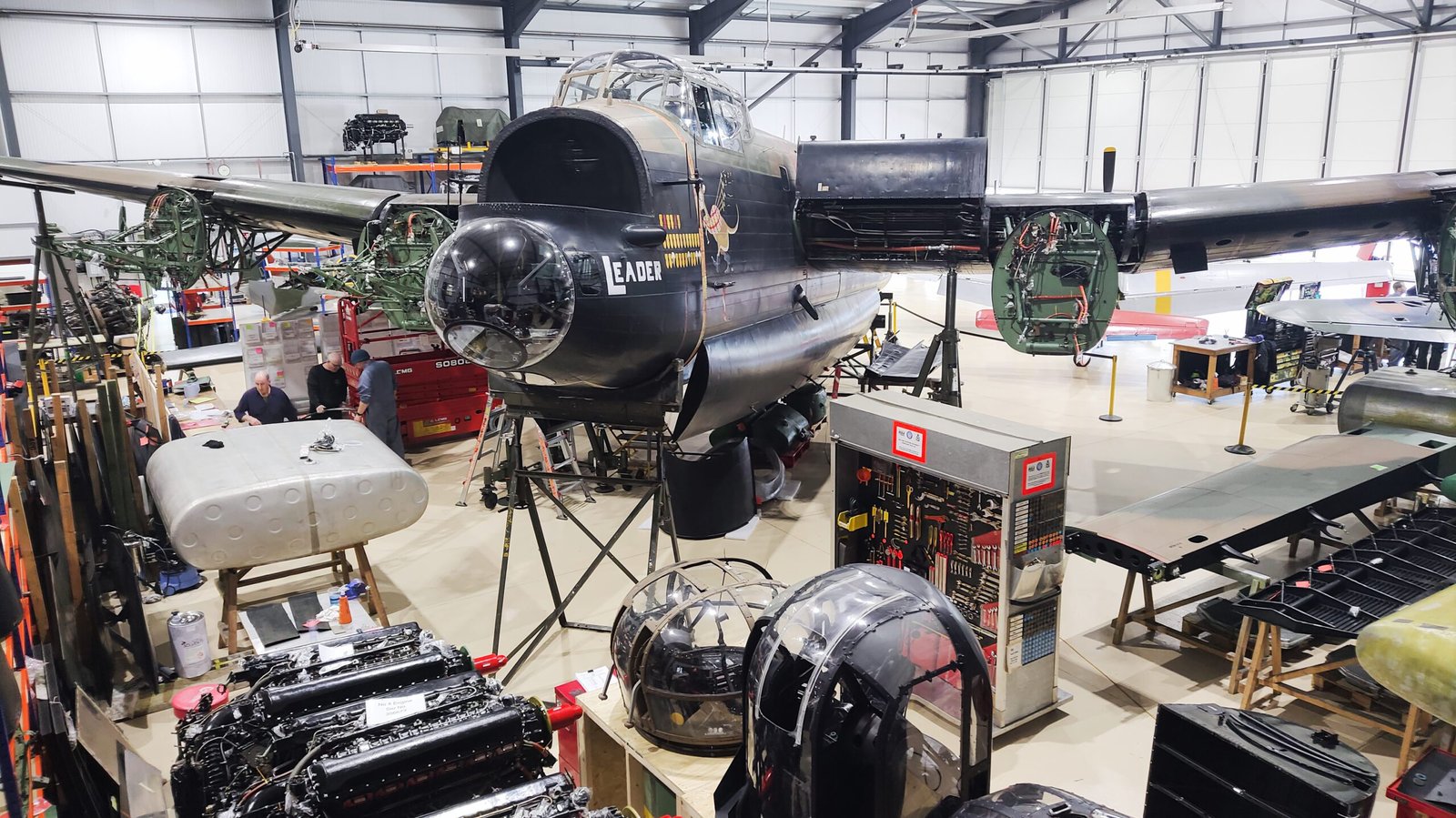
Significant progress has been made on the major maintenance programme for the Battle of Britain Memorial Flight’s Lancaster PA474 by the skilled engineers at the Aircraft Restoration Company (ARCo) at Duxford.
The majority of the Structurally Significant Item (SSI) inspections have now been completed, while the elastomeric hose survey has begun and zonal surveys are currently underway. As part of the Major programme, a substantial amount of non-destructive testing (NDT) is also required, and this work has now started and is expected to continue for around six weeks.
All six fuel tanks have been removed from the wings of the Lancaster, with their outer coverings stripped off for inspection. Engineers from BAE Systems (BAES) have visited ARCo to check the configuration of PA474’s fuel tanks against the original drawings, an essential step before the manufacture of six brand-new fuel tanks for the aircraft can begin. At the same time, the radiators and coolant tanks have been removed and sent to a specialist contractor for overhaul.
 The aircraft’s main undercarriage and tail leg have also been removed and stripped for maintenance. PA474’s tail leg had been suffering from leaks and loss of oleo pressure and was also prone to shimmying. The original manufacturer of Lancaster undercarriage components was Dowty Aviation, now part of the Safran Group — the world’s largest manufacturer of aircraft landing gear. Engineers from the company visited Duxford on 12th January to inspect the undercarriage and identified several specific issues with the tail leg, including a configuration problem, seal damage, and corrosion on the sliding tube. ARCo and the BBMF Project Team are now working together to resolve these issues using new components.
One of the most visible milestones in the programme has also now been completed: the rear fuselage has been split at the transport joint just aft of the mid-upper turret mounting point. This is the most practical way to replace the control rods for the elevators and rudders, which run through the fuselage frames. Some specialist equipment was borrowed from East Kirkby to assist with the task, and a new large trestle had to be fabricated to support the rear fuselage before the work could begin. The split was successfully completed on 16th January, and engineers were pleased to find no damage or corrosion at the frame joints.
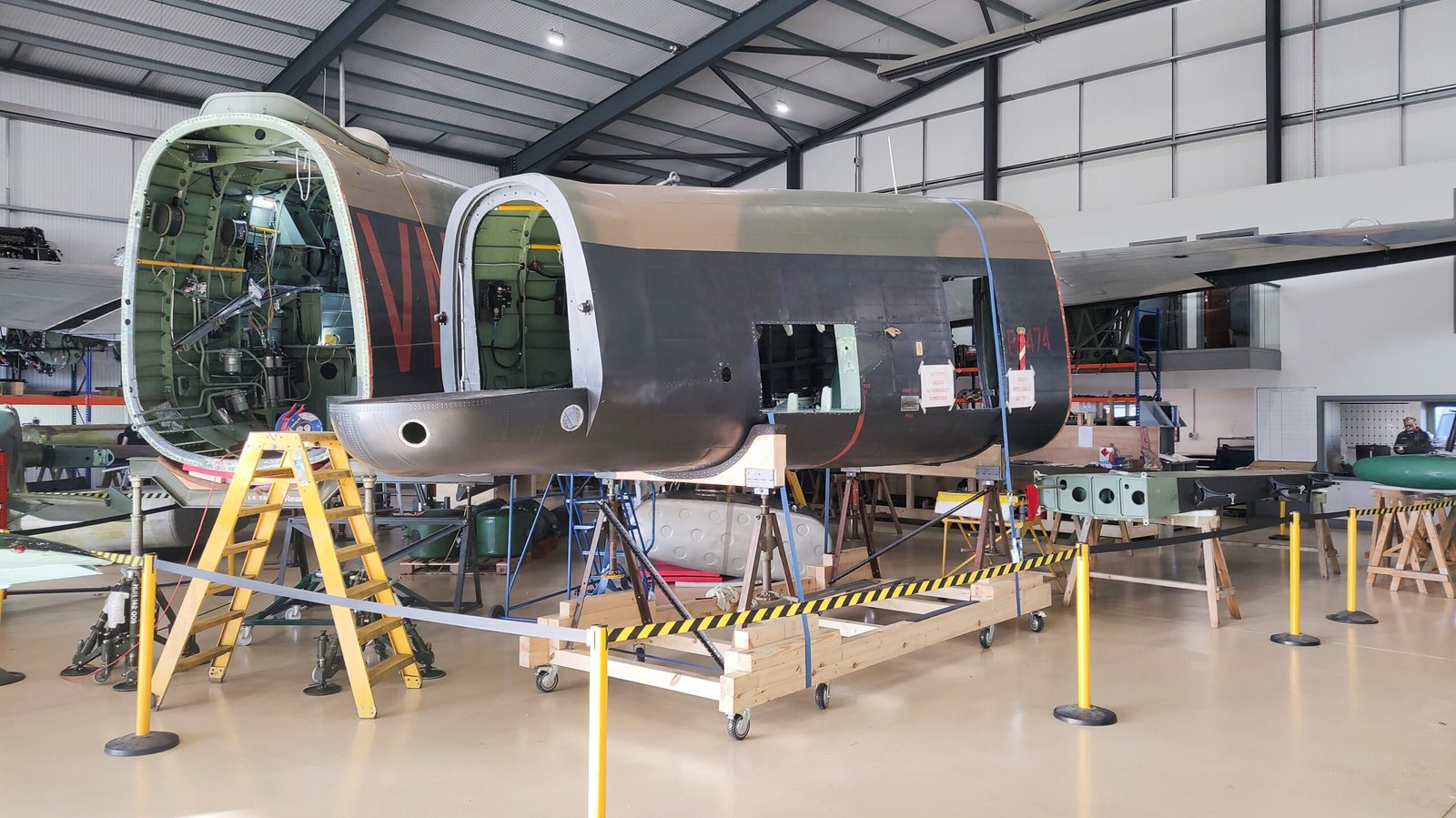
Lancaster PA474’s rear fuselage has now been split at the transport joint aft of the mid-upper turret mounting point. (Photo: BBMF)
Elsewhere, the first batch of components has now been sent away for ‘bay’ maintenance. This includes electrical, avionic and instrument items, which have been dispatched to SkySmart MRO Ltd — a company specialising in avionic and mechanical component repair, maintenance and inventory support.